

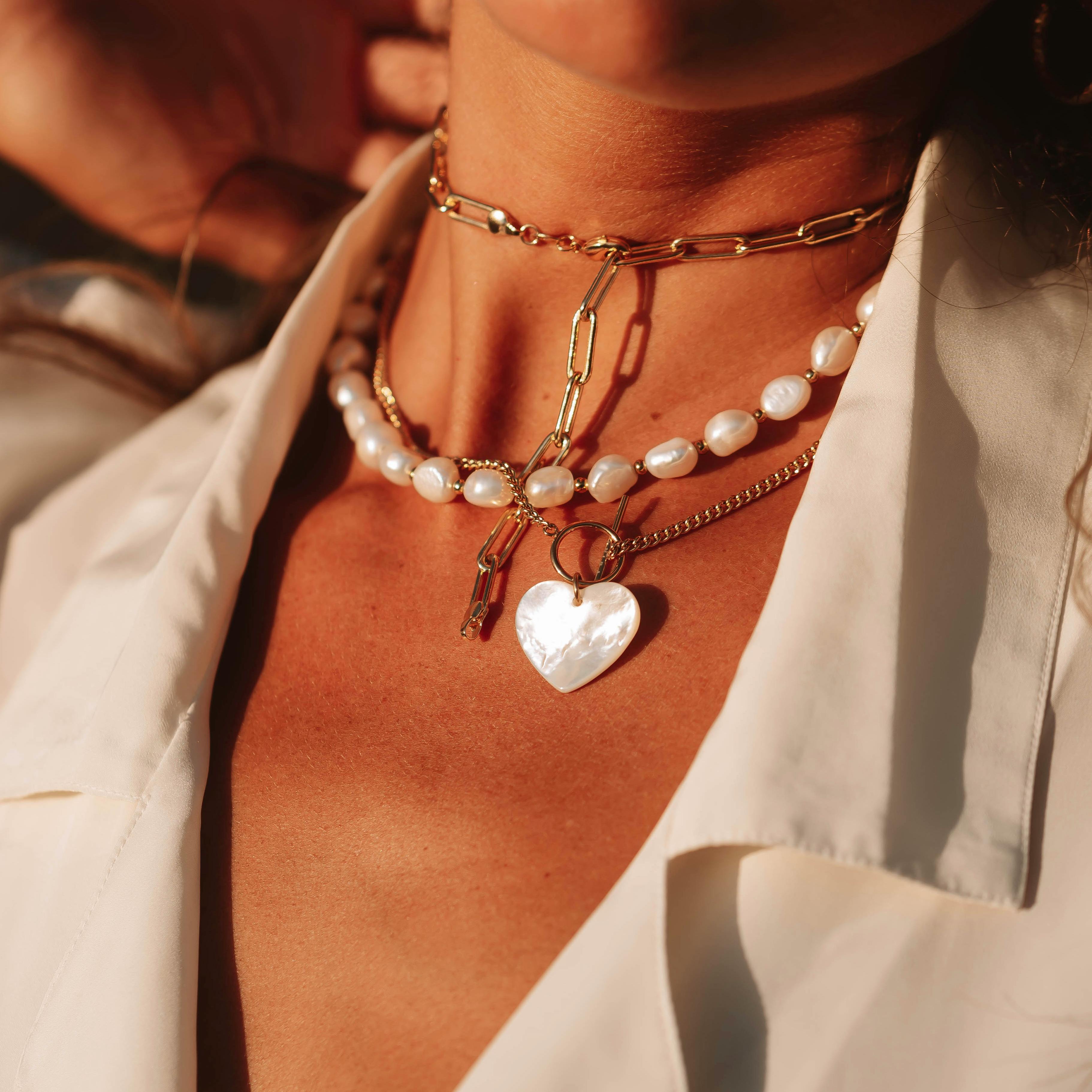
From Ancient Egypt to Modern Catwalks: A Symbol of Beauty, Power, and Identity.
In the vast world of ornaments and jewelry, the necklace holds a place of honor. It is not just a simple aesthetic accessory, but an object imbued with historical, cultural, and symbolic meaning. From prehistory to the present day, the necklace has adorned the necks of men and women of every civilization, transforming from a protective amulet to a symbol of power, status, and personal style. The Origins: The Necklace as an Amulet.
The first necklaces date back to prehistoric times, when they were made from animal teeth, shells, bones, and stones. They were not simply decorative: they often had a magical or protective value, linked to the spiritual world or hunting. In ancient Egypt, for example, necklaces made of gold and semiprecious stones were common, used not only for decoration but also to invoke the protection of the gods. Symbol of Power and Wealth
Over the centuries, the necklace has also become a powerful symbol of social status. Kings, nobles, and priests of Mesopotamian, Greek, and Roman civilizations wore precious necklaces to emphasize their role and authority. During the Middle Ages, necklaces were often given as tokens of alliance or loyalty, while during the Renaissance they became true masterpieces of jewelry, often depicted in court paintings.In the Christian world, necklaces with crosses or sacred relics were used to express devotion. In subsequent centuries, with the rise of the bourgeoisie, the middle classes also began to adopt this ornament, adopting less opulent but equally meaningful versions.
Who wore them? Not just women.
Contrary to what one might think, the necklace has never been an exclusively feminine accessory. In ancient times, men too—particularly warriors, priests, and rulers—wore them with pride. Even today, in many African, Asian, and South American cultures, men wear necklaces as part of their traditional or ceremonial attire. In the contemporary Western world, the revival of the 1970s and 1990s style has brought men's necklaces back to the center of fashion, making them a symbol of personal style, identity, and belonging.
The Necklace Today: Between Fashion and Meaning.
Today, the necklace continues to be one of the most beloved and versatile accessories. Whether it's a simple silver chain, an ethnic necklace, or a piece of fine jewelry, the message is always the same: to communicate something about yourself. In an era where fashion is increasingly connected to identity, the necklace remains a powerful tool of expression. It can represent a memory (as in the case of medallions), an emotional bond, an aesthetic choice, or even an ideology. And it is precisely this multiplicity of meanings that makes it a timeless object, capable of spanning centuries and cultures without losing its allure. In conclusion, the necklace is not just an ornament. It is a wearable piece of history, a symbol that combines aesthetics, power, spirituality, and identity. From the tombs of the pharaohs to the red carpets of Hollywood, this jewel continues to tell stories: of those who created it, of those who have worn it, and of those who will wear it.